Our lab combines synthetic and evolutionary biology to study both fundamental and applied questions using microorganisms. We design biological systems with state-of-the-art synthetic tools and pair them with experimental and directed evolution — to understand why a given phenomenon arises, and how it can be used to solve real-world problems.
Get in touchThis video was AI-generated as an accessible summary. For accurate scientific detail, please read the original papers below.
We investigate how and why division of labour emerges among microbes, and the conditions that favour cooperation over generalist strategies. Building on our work describing division-of-labour traits in nature, we now use synthetic biology to reshape these systems and probe their underlying principles.
Industrial bioprocesses rely on either single strains or multi-strain consortia, and each strategy carries its own limitations. Working with industrial partners, we apply evolutionary theory to understand and overcome these challenges in real-world production settings.
We combine AI-guided molecular design with experimental and directed evolution to test long-standing questions in evolutionary biology. This lets us build tailored biological systems and use them as precise tools to probe how living systems adapt.
Analyse BMG LABTECH and Tecan i-control plate-reader data in your browser. Import measurements and plate metadata, apply blank correction, explore replicate-level curves, and estimate growth parameters without uploading experimental data.
Open Growth Curve Analyser →

From a new beginning at Queen Mary to the discoveries ahead.
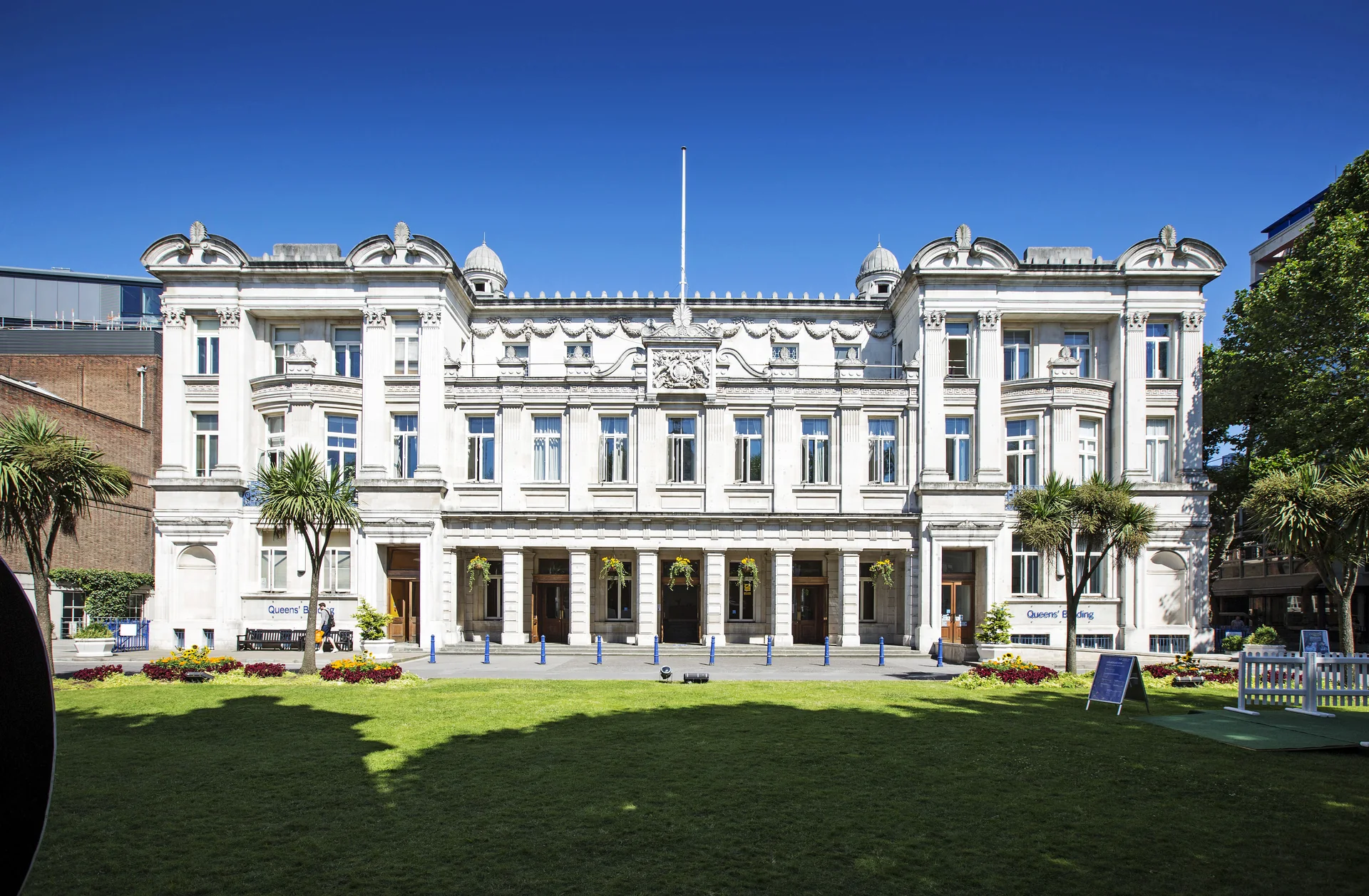
Zheren began his position at Queen Mary University of London on 1 September 2025 — the beginning of a new chapter in synthetic and evolutionary biology.
Meet the teamZheren taught his first class for BIO751P, Principles of Synthetic Biology, on 13 October 2025.
Collaborative work on engineering environmental bacteria for whole-cell PET hydrolysis and assimilation connects microbial research with biotechnology.
Our lab received its first grant from the Royal Society on 4 September 2026.
Select a moment to explore.